
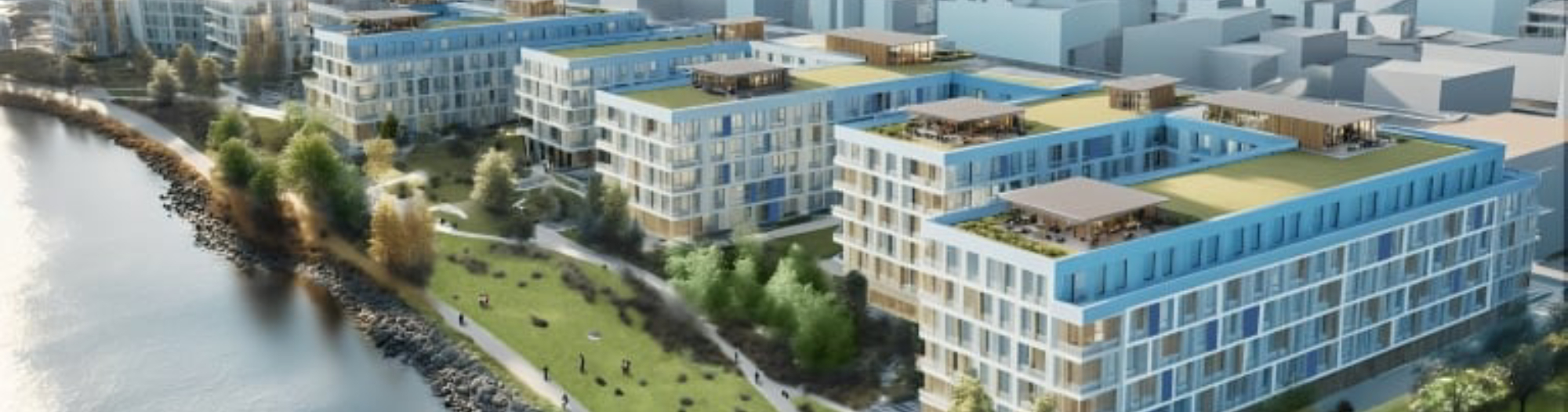
The intersection of urban development challenges and sustainable building solutions presents a unique opportunity for American cities. As municipalities face increasing pressure to address housing affordability and economic development, innovative construction approaches using renewable materials offer promising alternatives to conventional methods. The Accelerator Cities Program provides a structured pathway for local governments to explore, implement, and showcase the benefits of advanced wood building systems while receiving financial, technical, and educational support from federal and industry partners. This initiative represents a transformative opportunity for forward-thinking cities ready to pioneer the next generation of urban development—and for city agencies to lead an effort that strengthens both urban development and rural economies while improving forest health.
Accelerator Cities Blueprint
To continue to activate new cities, the SLB has developed a new Accelerator Model Blueprint. The Blueprint was developed to help city leaders evaluate how wood construction can support local housing, economic development, and sustainability goals. View the full Blueprint below:
Accelerator Cities In Action: New York City Case Study
Through the Accelerator Cities Program, the Softwood Lumber Board (SLB) and the U.S. Department of Agriculture Forest Service (Forest Service) partnered with New York City to help explore innovative construction solutions aligned with the city’s climate and economic development priorities. View the full Case Study below:
Program Overview
Cities across the country are increasingly recognizing the multiple benefits of incorporating sustainable wood building systems into their development strategies. Local governments are discovering that lumber-based construction methods can effectively address critical municipal challenges such as affordable and attainable housing shortages as well as economic development initiatives. The expanding use of wood building systems in urban settings is yielding compelling data on cost-effectiveness, construction efficiency, and positive impacts on occupant wellbeing through biophilic design. These practical advantages make wood an attractive option for forward-thinking municipalities looking to innovate while addressing their communities’ most pressing needs.

To support broader adoption of wood building systems within the United States, the USDA Forest Service (Forest Service) and the Softwood Lumber Board (SLB) have developed the Accelerator Cities Program. This public-private grant assistance program connects local officials, federal agencies, non-profits, and building professionals, interested in the expansion of lumber-based building systems to explore the potential in their communities.
The use of wood products such as mass timber and innovative light-frame construction allows for even greater sustainable building construction. And just as importantly, strengthening the market for lumber systems increases the value of forestlands, giving landowners greater incentive and financial means to actively manage their forests—including removing excess vegetation that serves as wildfire fuel—while also improving overall forest health and stimulating rural economies.
So far, seven launches—in Boston, New York City, Atlanta, Santa Monica, Portland, Washington, D.C., and the state of Alabama—have demonstrated the impact of this coordinated, localized approach. Funding from the Forest Service and the SLB, the U.S. Endowment for Forestry and Communities, and other contributors is enabling these early adopters to financially strengthen active development projects in the essential, early phases of project planning and design. Selected projects also received technical, education, and communications assistance from Forest Service and SLB-funded programs, all of which have experience in light-frame, hybrid, and mass timber construction.
An Accelerator City can foster critical connections between governments, industries, manufacturing, safety and code officials, fire services, real estate developers, and the design and construction community. These collaborations often reveal new funding opportunities, construction methods, and workforce relationships while familiarizing practitioners with the feasibility of wood construction. By supporting building projects that use light-frame, steel-timber hybrid, and mass timber systems, participating cities can expand affordable housing, create construction jobs, raise awareness about sustainable renewable materials, improve forest health, and strengthen both urban and rural economies. Additional benefits include boosted property values, increased workforce participation and productivity, and enhanced aesthetic qualities that improve urban environments.

The Brooklyn Public Library Lots Branch, selected in the first round of NYCEDC’s Mass Timber Studio, broke ground in 2025.
Program Benefits to Cities
- Leadership Recognition: Join an exclusive cohort of pioneering cities positioned as national leaders in innovative construction, with opportunities for media coverage, speaking engagements, and community influence.
- Economic Development: Strengthen both urban and regional city economies by boosting construction jobs, supporting local manufacturing and distribution, and developing skilled workforce opportunities in sustainable building technologies.
- Housing Solutions: Expand affordable and attainable housing options through cost-effective wood construction systems that can reduce building timelines and overall project costs.
- Cleaner Construction: Mass timber construction can reduce by 80% the construction traffic and noise on a building project compared to other materials.
- Regulatory Innovation: Position your city as a leader in building code advancement and streamlined permitting processes for sustainable construction methods.
- Cross-Sector Collaboration: Foster valuable connections between government agencies, private industry, code officials, fire services, developers, and design professionals.
- Technical Expertise Access: Provide project teams with direct technical assistance from industry experts at WoodWorks, educational resources from the American Wood Council, and communications support from Think Wood.
- Property Value Enhancement: Increase local tax base through wood buildings that typically command premium values for their aesthetic appeal and wellness benefits.
- Grant Funding: Secure $75,000-$150,000 in limited funding available only to cities demonstrating the highest potential for innovation and impact.
- Proven Success Model: Learn from the experience of prior participant cities like Boston, New York, Atlanta, Santa Monica, and Portland that have already leveraged this program over multiple years to accelerate millions of square feet of sustainable construction.
Funding Goals and Eligibility
The Accelerator Cities Program selects only a limited number of cities each year from a competitive national pool of applicants. Cities chosen for this exclusive program join a reputable network of municipal leaders driving innovation in sustainable construction across the United States.
Applications will be evaluated based on alignment with the program’s strategic objectives and potential for meaningful impact. Strong proposals will demonstrate clear pathways to introduce more practitioners to lumber-based construction, identify significant opportunities for new development (particularly attainable housing), and show potential for realizing completed wood construction projects within the program timeframe. Priority will be given to cities that present comprehensive engagement strategies for raising public awareness about sustainable building materials and their benefits. The selection committee will look favorably upon applications that demonstrate strong cross-sector collaboration, including commitments from key stakeholders such as building departments, fire services, and local AEC industries. Additionally, proposals that articulate how the program will create or expand markets for wood generated by U.S. forested lands and strengthen connections between urban development and rural economic opportunities will receive special consideration. Cities should also describe their ability to meet the matching requirements and to fulfill all program deliverables.
The funders encourage the following entities to apply for participation in the program:
- Lead entity for the city (or city-designated organization) that will receive the funding and become responsible for fulfilling the program.
- Mayor’s Office
- Department of Buildings/Authority Having Jurisdiction.
- Fire Services or local Fire Department.
- Non-profit organizations in the building community such as local chapters of the American Institute of Architects, Structural Engineers Associations, Urban Land Institute, Economic Development Organizations, and U.S. Green Building Council.
Application Process
Applicant cities should contact the SLB for guidance developing a proposal that identifies their target development categories: multifamily, commercial, institutional, and/or others. Applicants may indicate additional priorities or specific building types, such as affordable or attainable housing, mixed-use, K-12 schools, hospitality, gathering spaces, and so forth. Proposals should explain how wood products would be incorporated and featured within the design and examine why the building system is appropriate for the project.
The typical award amount per Accelerator City is $75,000 – $150,000. Cities are required to match (cash or in-kind contribution) at least 50% of the total award. Individual awards to be granted by the city to project teams are typically $25,000 per project.
Leading Cities: Past and Current Program Success Stories
These pioneering cities have established themselves as national leaders in sustainable construction innovation through their participation in the Accelerator Cities program:
Santa Monica Mass Timber Accelerator
Santa Monica, California
In 2025, the City of Santa Monica launched the Mass Timber Accelerator to advance the city’s climate action and housing goals through lower-carbon building materials. The program will support up to five early-phase development projects exploring the technical and financial feasibility of mass timber construction. In partnership with AIA Los Angeles, the initiative will also fund communications and outreach to engage the design and construction community through events, reports, and case studies. By fostering collaboration among architects, developers, and city staff, the program aims to highlight the economic, environmental, and aesthetic benefits of wood building systems, reduce embodied carbon in new construction, and expand workforce and business opportunities across Southern California’s growing timber economy.
Portland Mass Timber Accelerator Program
Portland, Oregon
The City of Portland’s Housing Bureau launched the Portland Mass Timber Accelerator in 2025 to advance sustainable, affordable housing and commercial development using Oregon’s growing mass timber supply chain. Supported by Prosper Portland, the pilot program provides funding to developers to conduct early-phase feasibility studies exploring mass timber construction. The program will support up to six projects that highlight Portland’s leadership in low-carbon building innovation, climate resilience, and workforce development, while fostering collaboration between city agencies, designers, and builders to help achieve Portland’s 2050 carbon neutrality goals.
NYC Mass Timber Studio
New York City, New York
The New York City Economic Development Corporation’s Mass Timber Studio awarded seven projects in the first phase of its program in early 2024 to help catalyze deployment of wood construction throughout New York City. The winning projects included four multifamily buildings, a mixed-use industrial space, a public library branch, and a recreation center. The Studio announced a second cohort of selected projects in August 2025, including the New York Climate Exchange, projected to be the largest mass timber commercial project in New York City at more than 140,000 square feet, and Stapleton B4/B5 Residential, which includes 500 affordable and market-rate homes. A third cohort, focused exclusively on affordable housing, is now underway.
Georgia Mass Timber Accelerator Program
Atlanta, Georgia
The Georgia Forestry Foundation’s (GFF) Mass Timber Accelerator Program provides Georgia with a way to grow its forest products market, as the state grows 50% more wood than it harvests, according to the GFF. After announcing its first three selected projects in 2024—a four-story mixed-use expansion in Atlanta, a nature center in Roswell, and a four-story residential building in Savannah—the program expanded its scope to include additional cities across the state. Renamed the Georgia Mass Timber Accelerator, the program supported a second round of projects in 2025. The program expanded from Atlanta into new urban centers through Mass Timber Hubs—educational events developed in partnership with WoodWorks to engage local design and construction professionals.
Boston Mass Timber Accelerator Program
Boston, Massachusetts
The Boston Mass Timber Accelerator was the first of the programs to launch in 2021. The program awarded seven projects in 2022 and three additional projects in a second round in 2023. Among the supported projects was Bunker Hill, where a six-story affordable housing project built with a cross-laminated timber floor and roof system and a nine-story mass timber and steel hybrid building will serve as influential showcases for the potential of wood construction in the transformation of 42 1940s-era buildings into a sustainable, mixed-income residential community. The accelerator issued a final report finding that mass timber is accelerating in the city and region, with eight active projects totaling over 1.3 million sq. ft. projected to be constructed with mass timber materials and 22 future projects totaling over 4.3 million sq. ft.
Alabama Mass Timber Accelerator Program
Alabama
In Alabama, the SLB partnered with the Alabama Forestry Foundation (AFF), the USDA Forest Service, and the U.S. Endowment for Forestry and Communities to launch the Alabama Mass Timber Accelerator—a program designed to help development teams explore mass timber and other wood-based structural systems on real housing and development projects across the state. The program is expected to support a minimum of three development teams, pairing direct financial assistance with technical guidance from WoodWorks on design, engineering, and code compliance throughout the process.
D.C. Mass Timber Accelerator Program
Washington, D.C.
In Washington, D.C., SLB partnered with the Washington Architectural Foundation (WAF), the USDA Forest Service, and the U.S. Endowment for Forestry and Communities to launch the DC Mass Timber Accelerator—a program designed to help development teams explore mass timber construction on active projects across the District. The program is expected to support an estimated four development teams through a competitive selection process, with SLB programs providing technical assistance on design, engineering, code compliance, and construction viability throughout the program.
Become an Accelerator City
Cities ready to join the ranks of municipal innovation leaders should act quickly. For application guidance and to discuss your city’s potential for selection, contact us immediately at acceleratorcities@softwoodlumberboard.org.